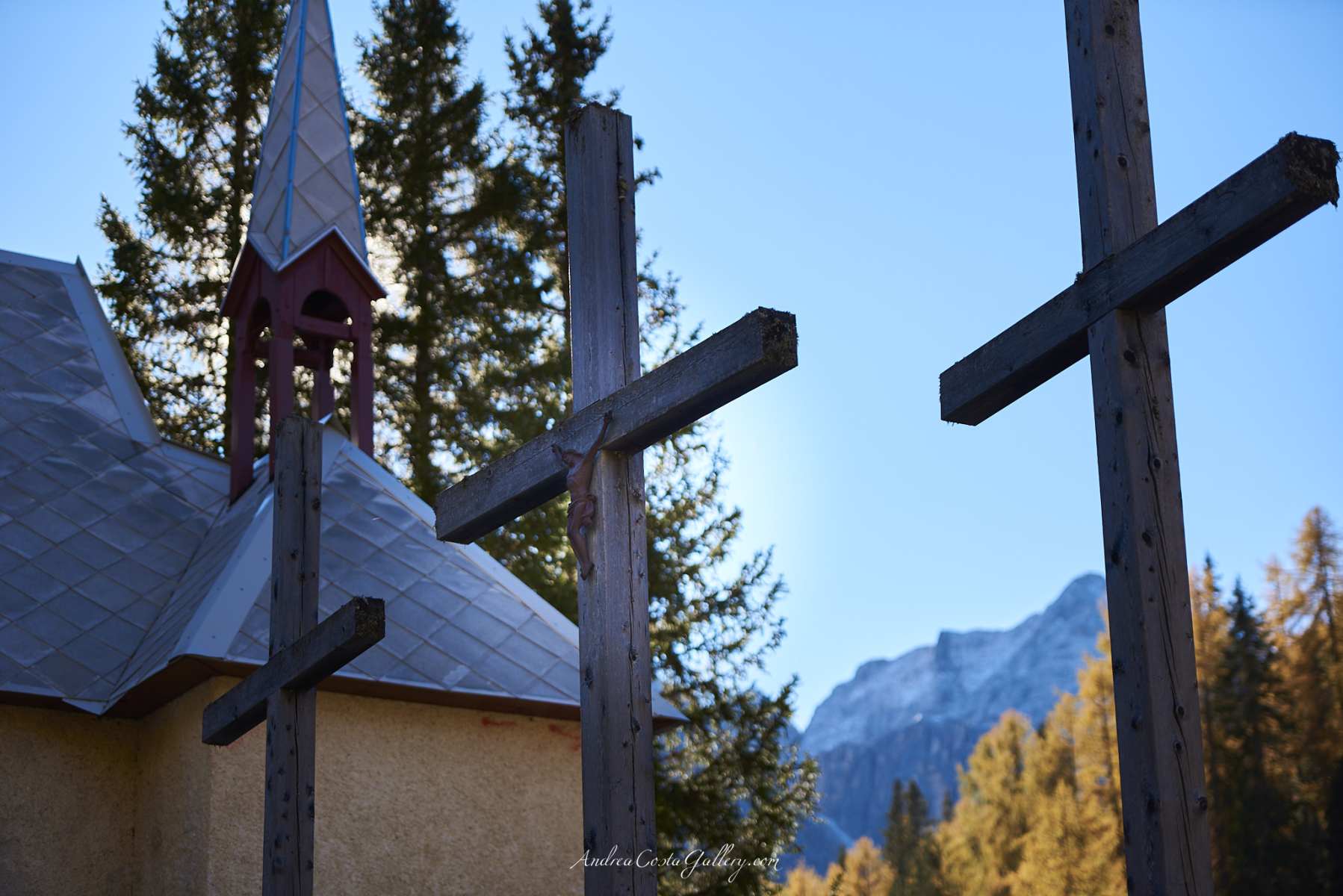
C’è un silenzio particolare al Passo Tre Croci in autunno. Un silenzio che non è assenza di suoni, ma un invito all’ascolto. Quando arrivo quassù a metà ottobre, l’aria è frizzante, tagliente, di quella che ti sveglia i sensi e ti fa affondare le mani nelle tasche del pile prima ancora di tirare fuori lo zaino fotografico.
A 1.809 metri di quota, Cortina d’Ampezzo sembra lontana, un dipinto incastonato nella valle. Ma è qui sopra che la natura dà vita al suo spettacolo più intimo e fiammeggiante: il regno del larice alpino.
La magia del foliage: quando i boschi si accendono
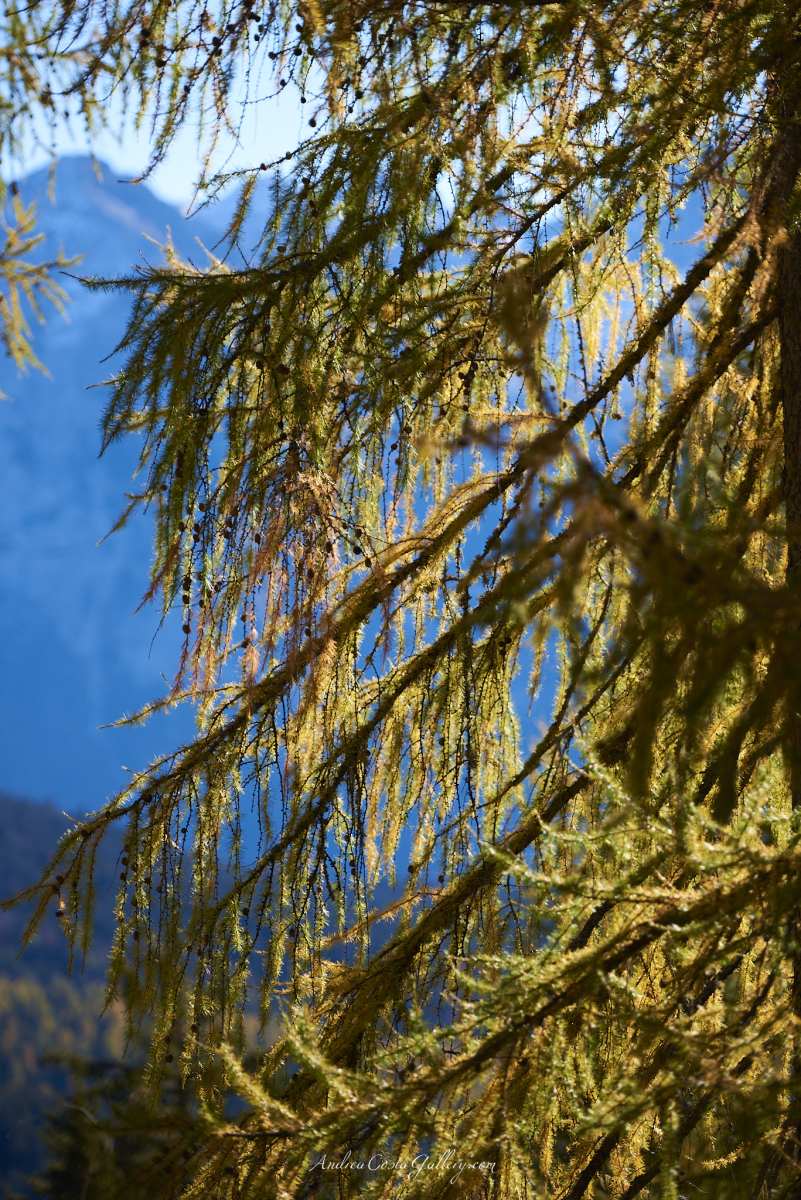
A differenza delle latifoglie che virano verso tonalità calde già a fine settembre, il larice (Larix decidua) segue un suo ritmo antico. È una conifera anomala, che sceglie di spogliarsi per l’inverno, ma prima di cedere i suoi aghi alla terra compie una metamorfosi straordinaria.
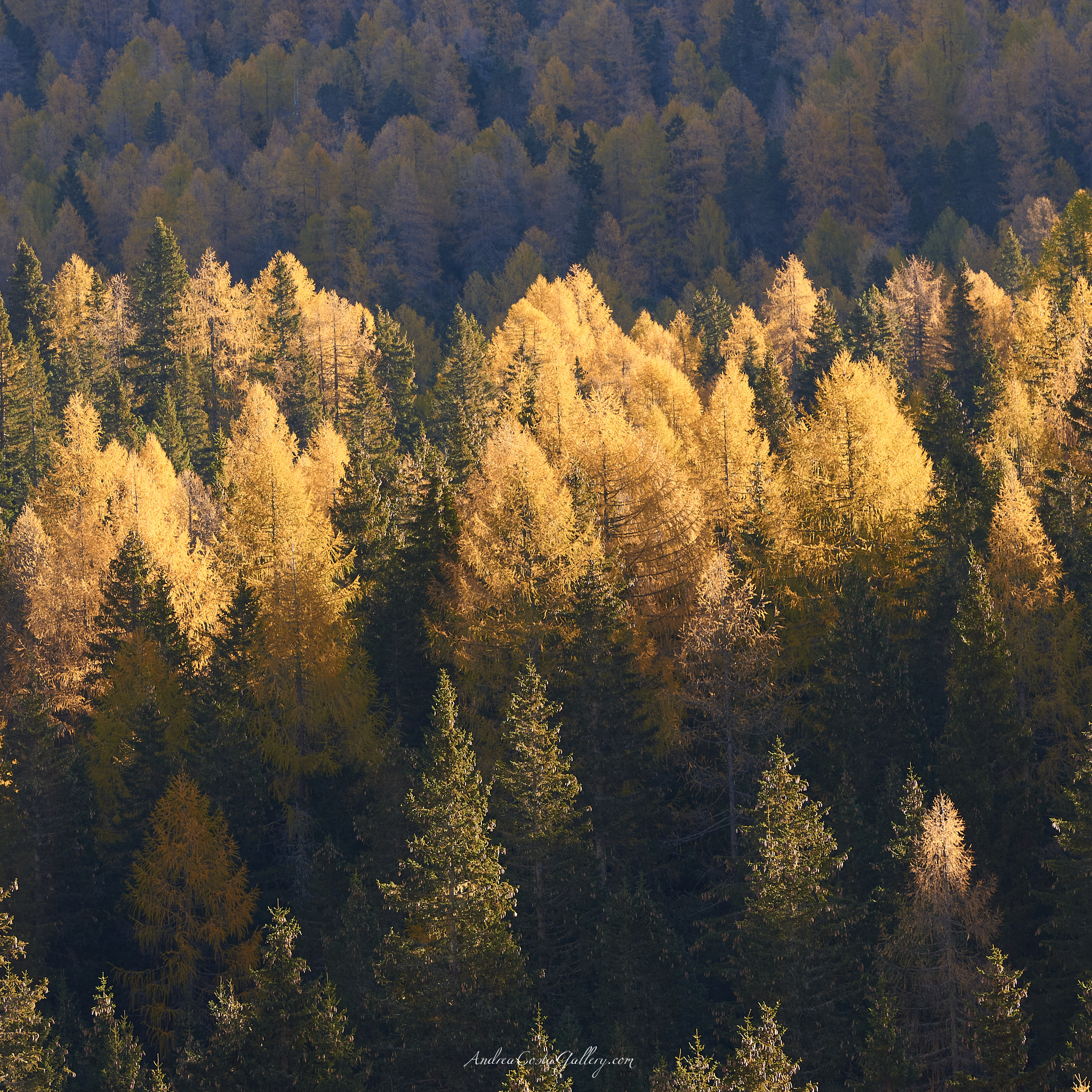
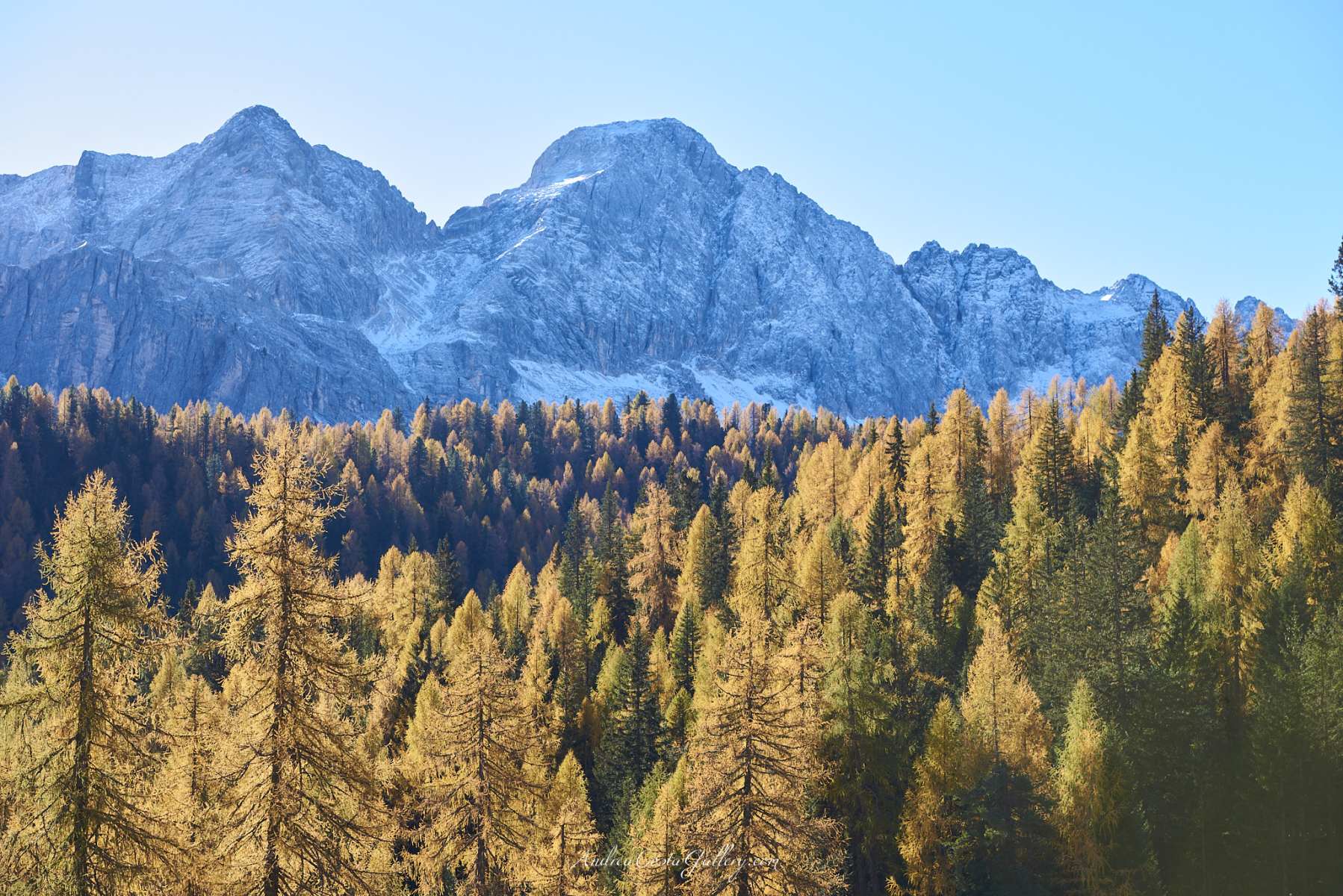
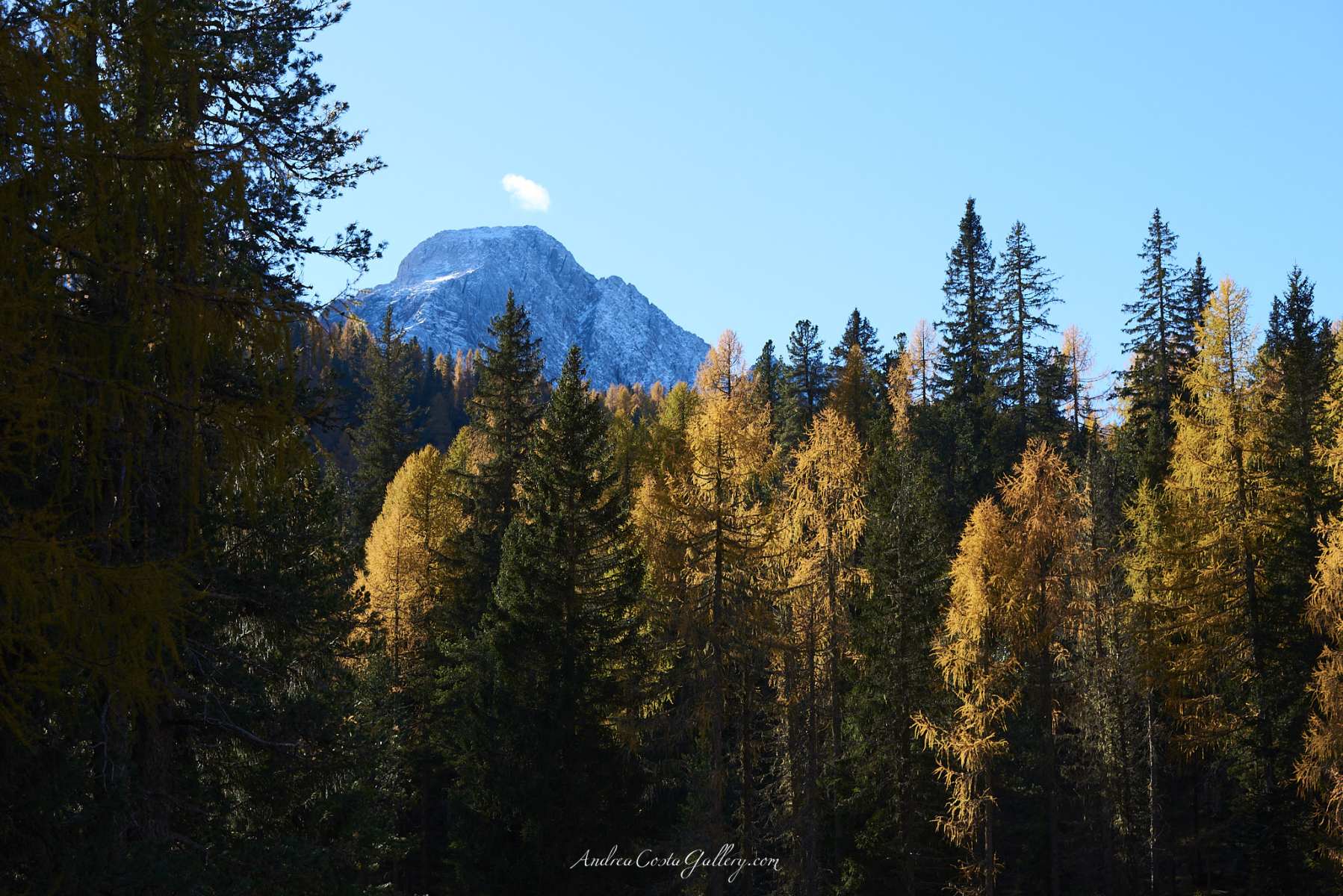
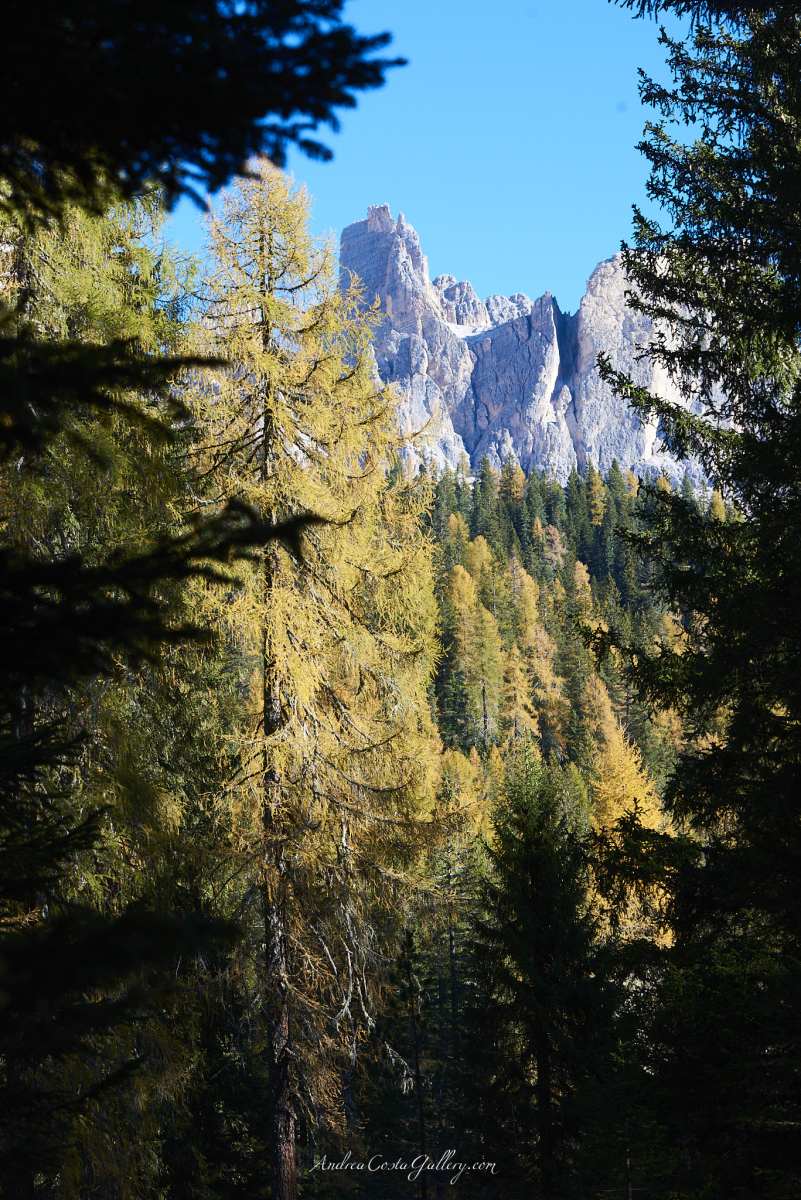
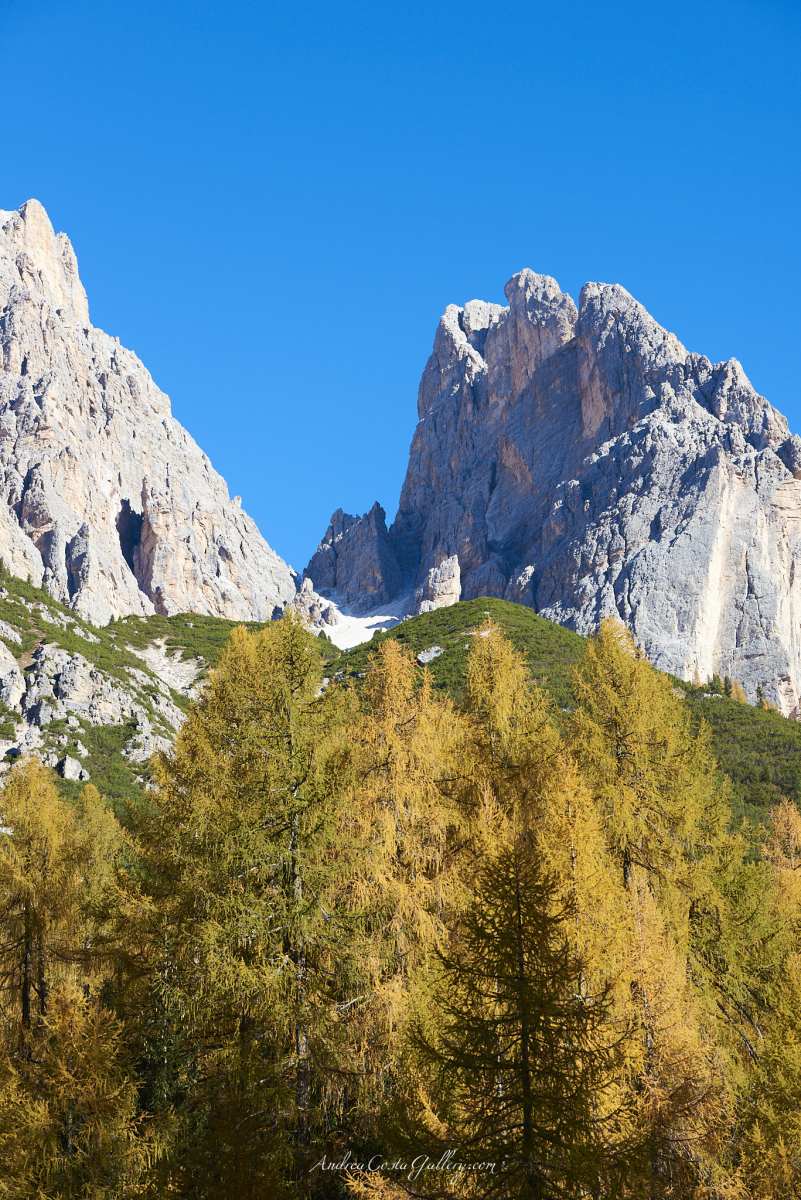
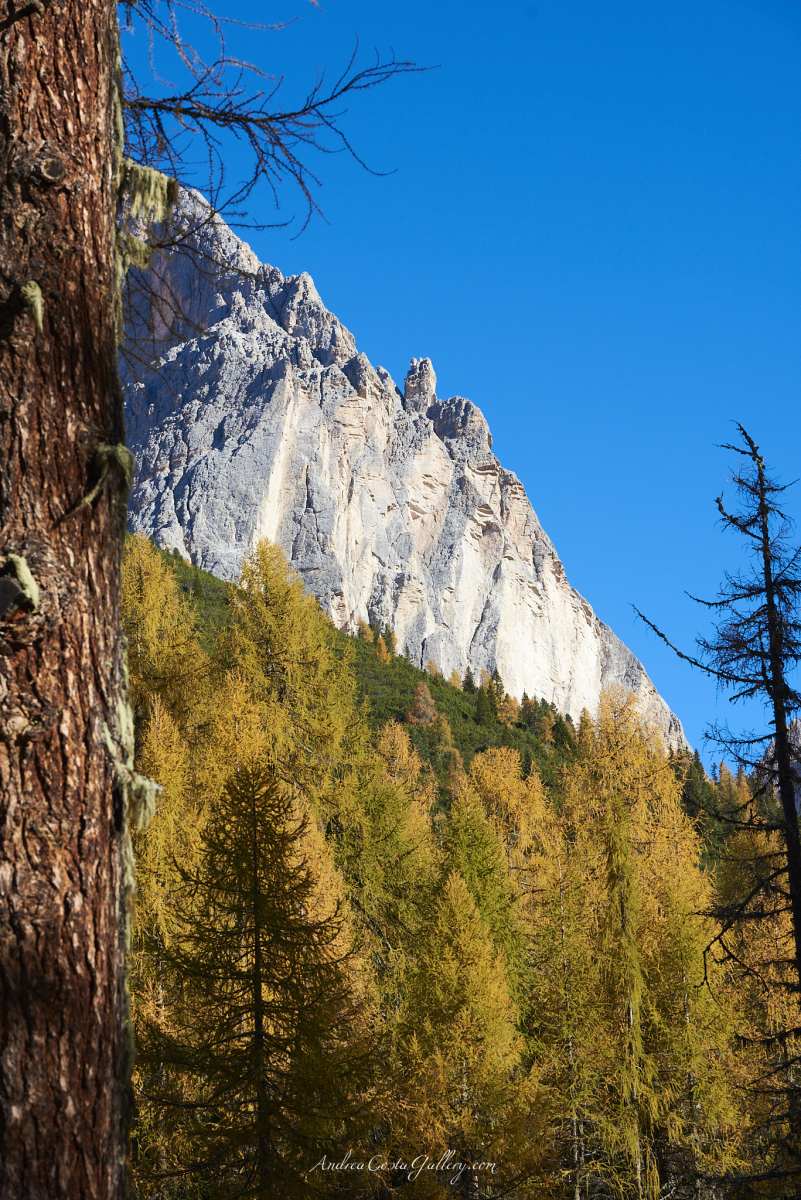
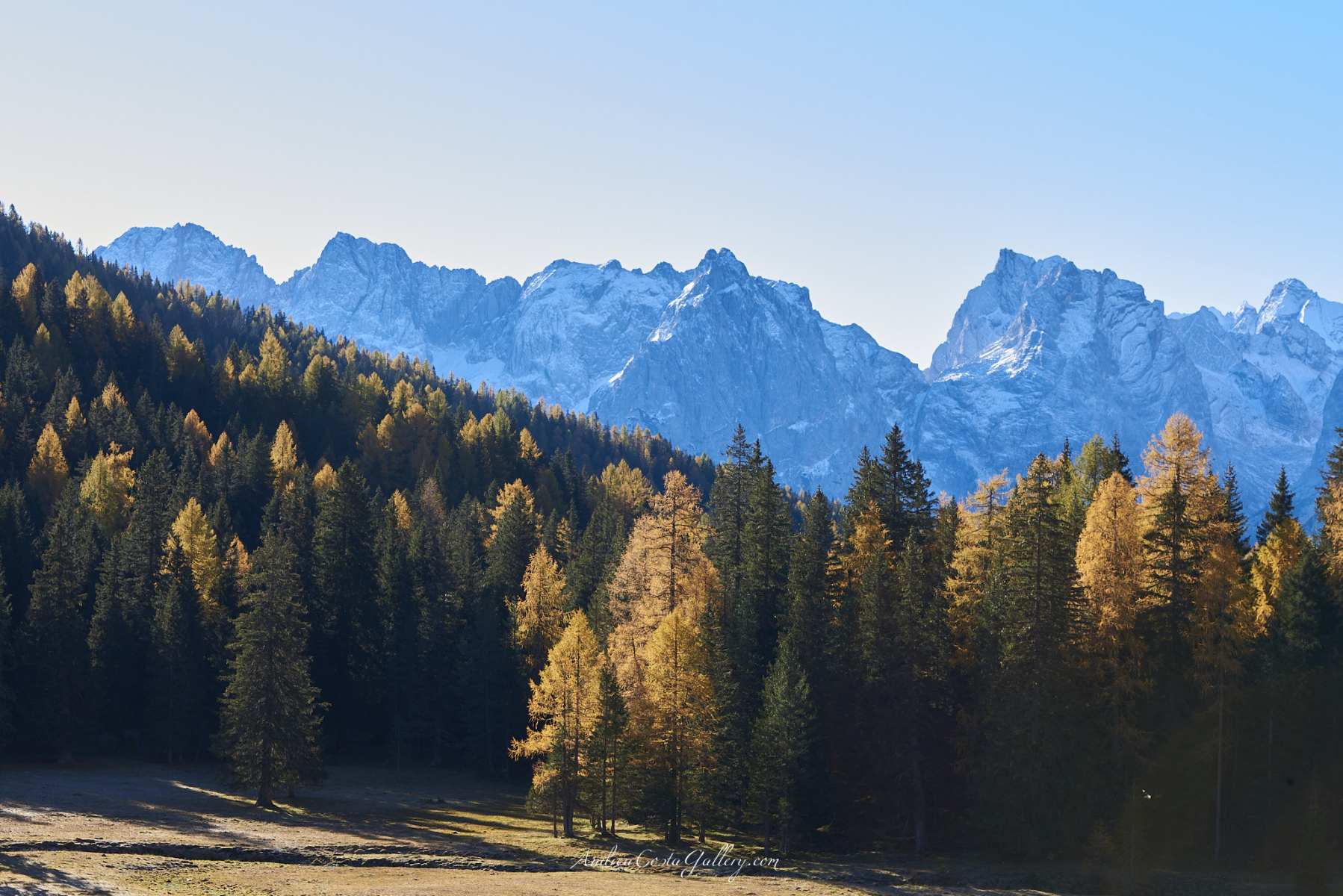
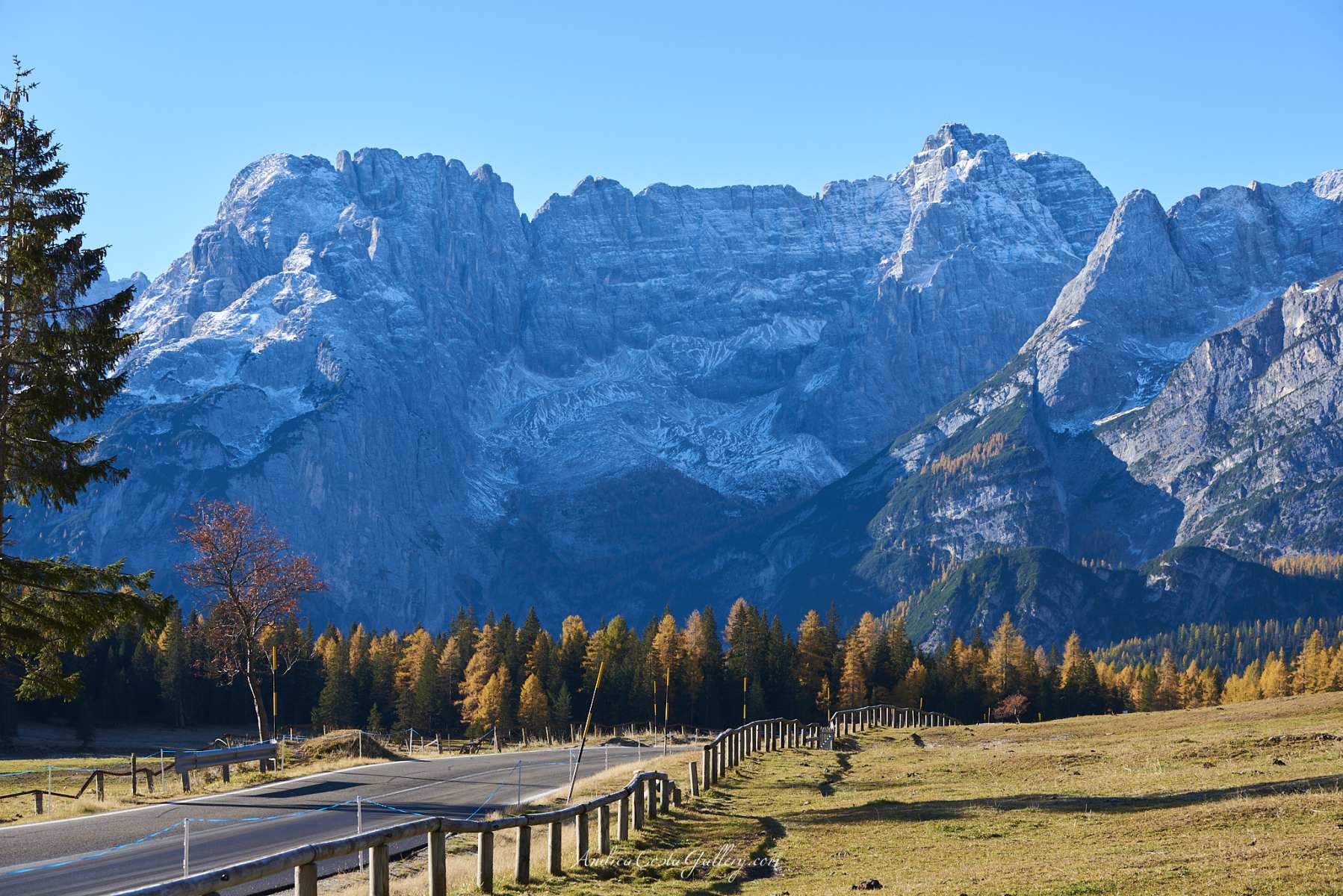
In ottobre, i boschi che abbracciano il Passo Tre Croci — le pendici del Cristallo e del Sorapiss — si accendono di un giallo così vivido, quasi acceso al neon, che sembra impossibile sia opera della sola clorofilla che svanisce. È una transizione cromatica che va dall’oro antico all’ambrato brillante.
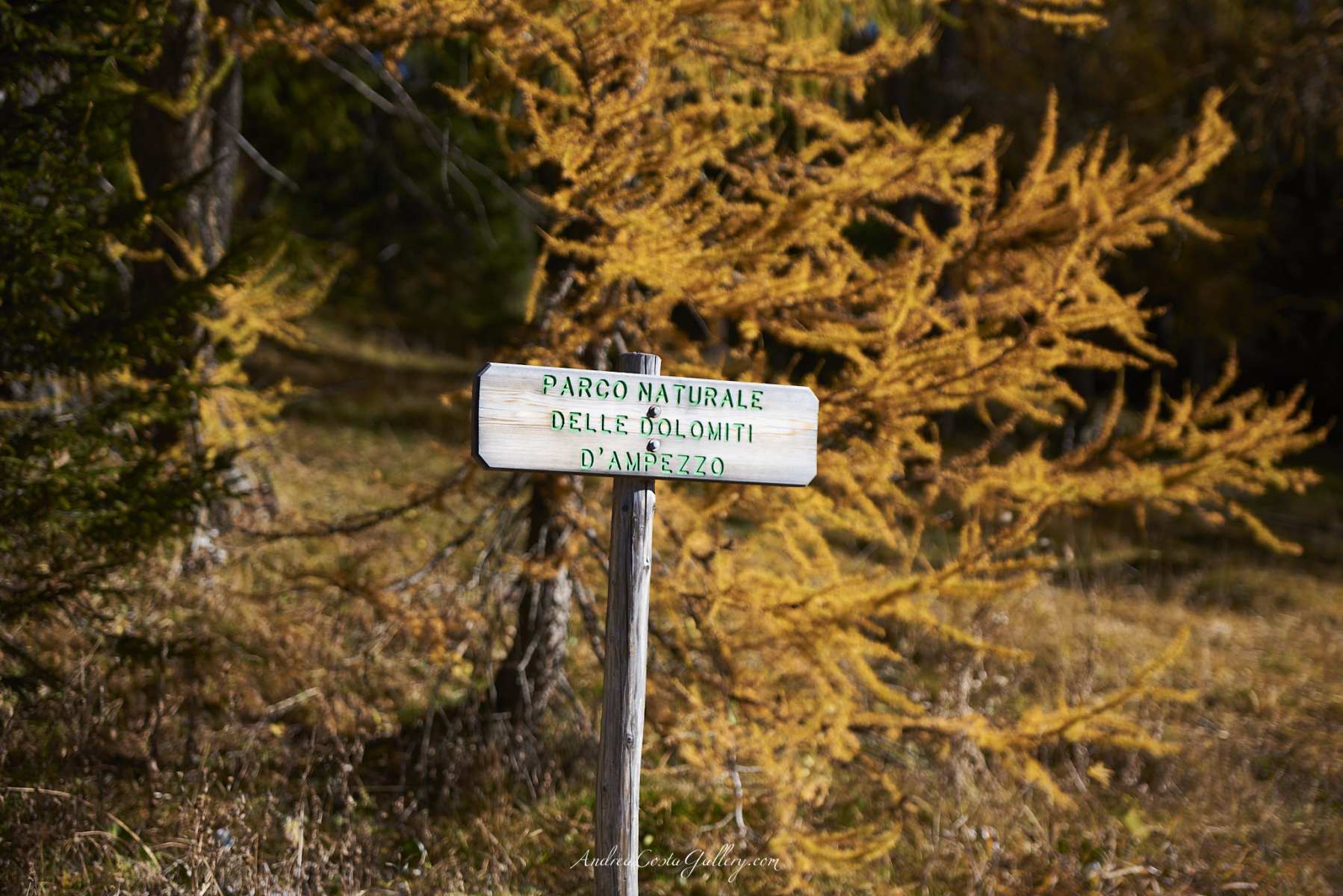
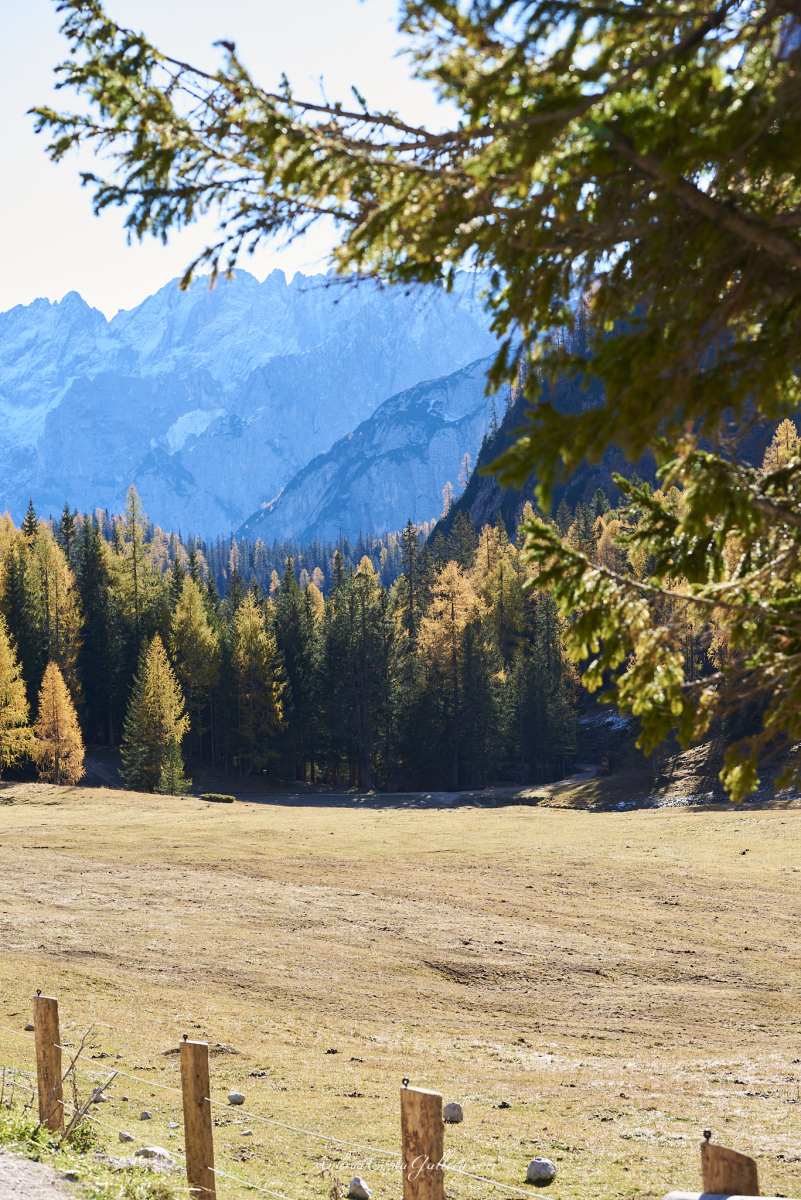
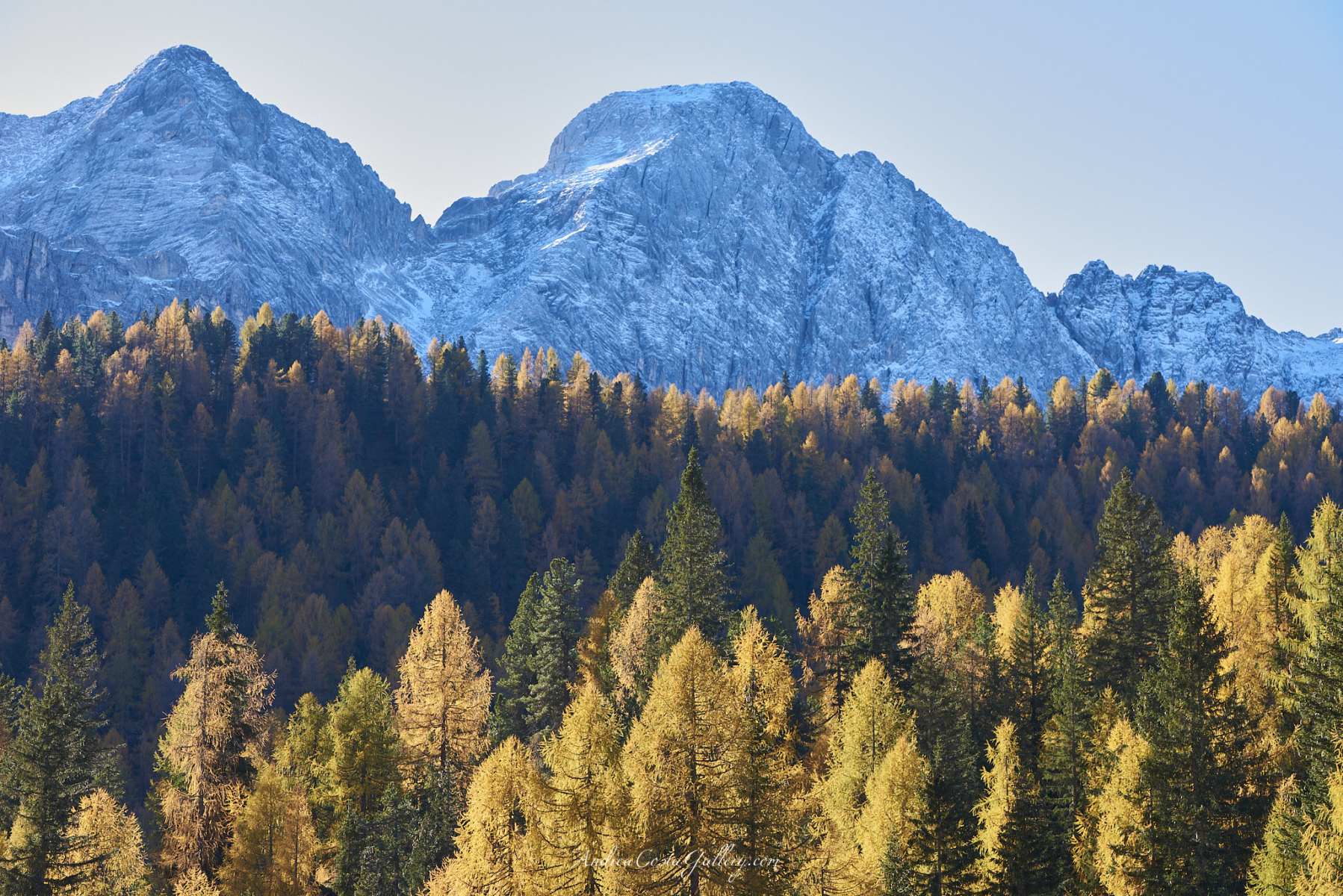
Camminando lungo i sentieri che portano verso il Lago Sorapiss o verso i prati alti, mi fermo spesso a osservare la composizione cromatica. Il contrasto è da togliere il fiato:
- Il giallo fiammeggiante dei larici domina i pendii.
- Il verde cupo e persistente dei pini mughi e degli abeti crea un bassorilievo cromatico di grande profondità.
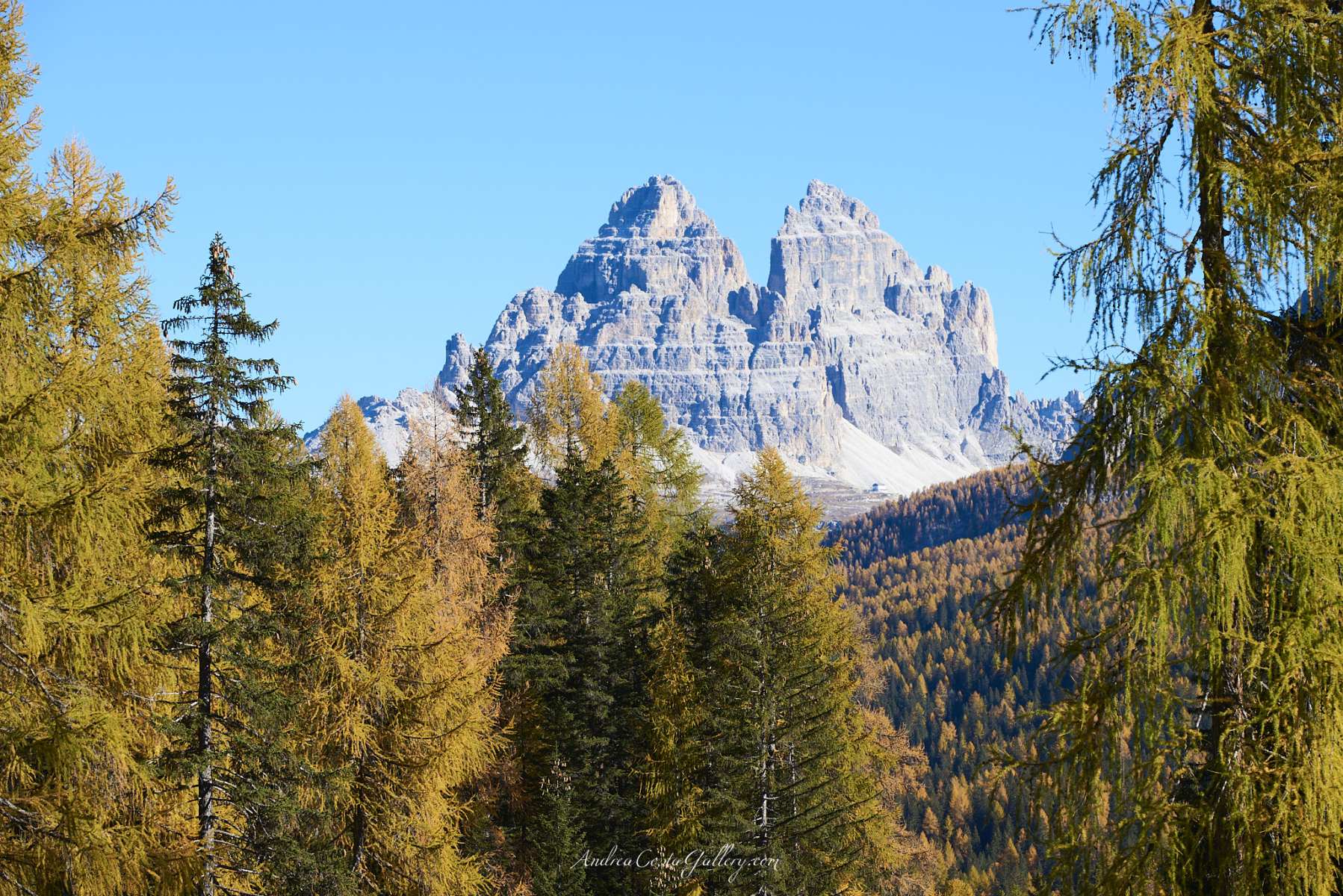
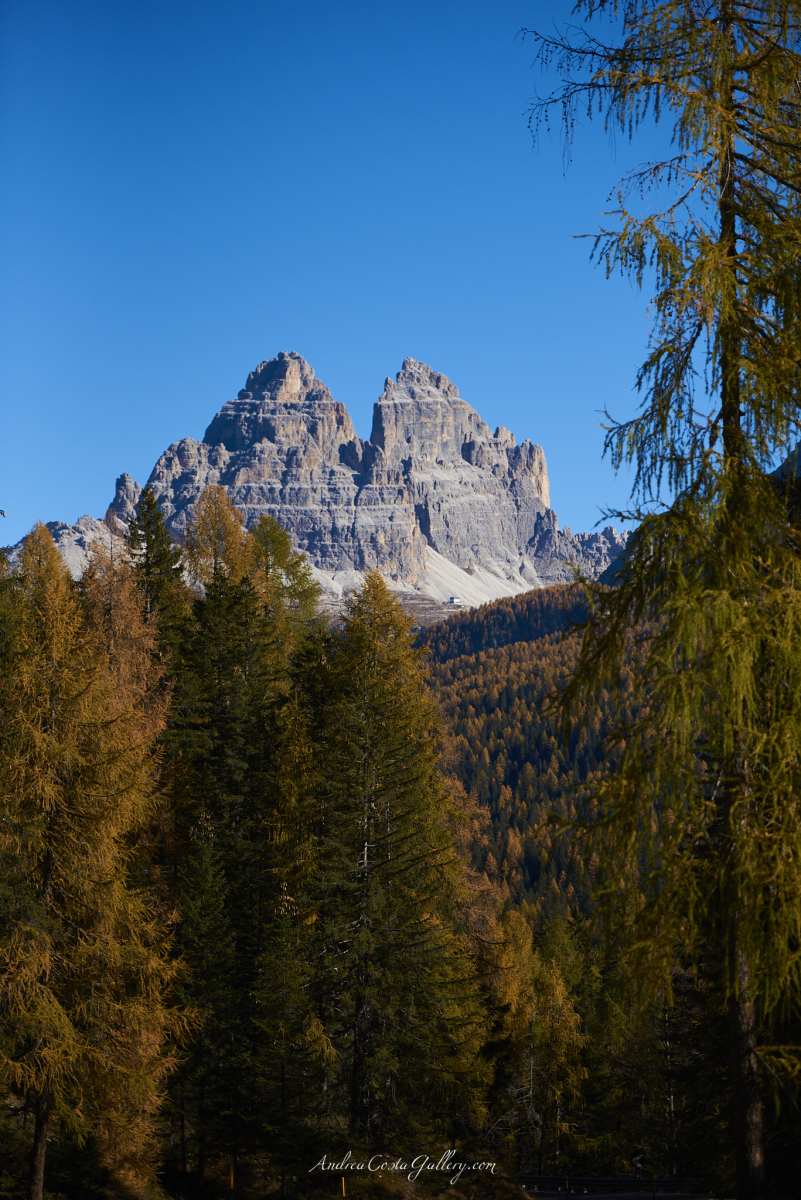
- Il grigio calcareo e severo delle pareti dolomitiche fa da anfiteatro naturale, riflettendo la luce radente del sole autunnale.
L’escursione e la tecnica fotografica: catturare la luce d’ottobre
Infilo gli scarponi e stringo i lacci. Lo zaino pesa il giusto: corpo macchina, un obiettivo grandangolare (16-35mm) per i grandi spazi, un teleobiettivo medio (70-200mm) per isolare i dettagli geometrici dei boschi, e il fondamentale filtro polarizzatore circolare.
1. Gestire la luce radente e il polarizzatore
A ottobre il sole non sale mai troppo alto nel cielo, regalandoci una “golden hour” che sembra durare quasi tutto il giorno. Le ombre sono lunghe, taglienti e scolpiscono i volumi delle montagne. Per esaltare i colori dei larici, avvito il polarizzatore sull’obiettivo. Ruotandolo, riesco a eliminare i riflessi speculari e micro-umidi dagli aghi e dalle rocce bagnate dalla brina mattutina. Il risultato è immediato: il giallo dei larici diventa saturo, profondo, e il cielo blu cobalto dietro le cime si fa improvvisamente scuro e drammatico.
2. Il teleobiettivo per la “compressione” dei piani
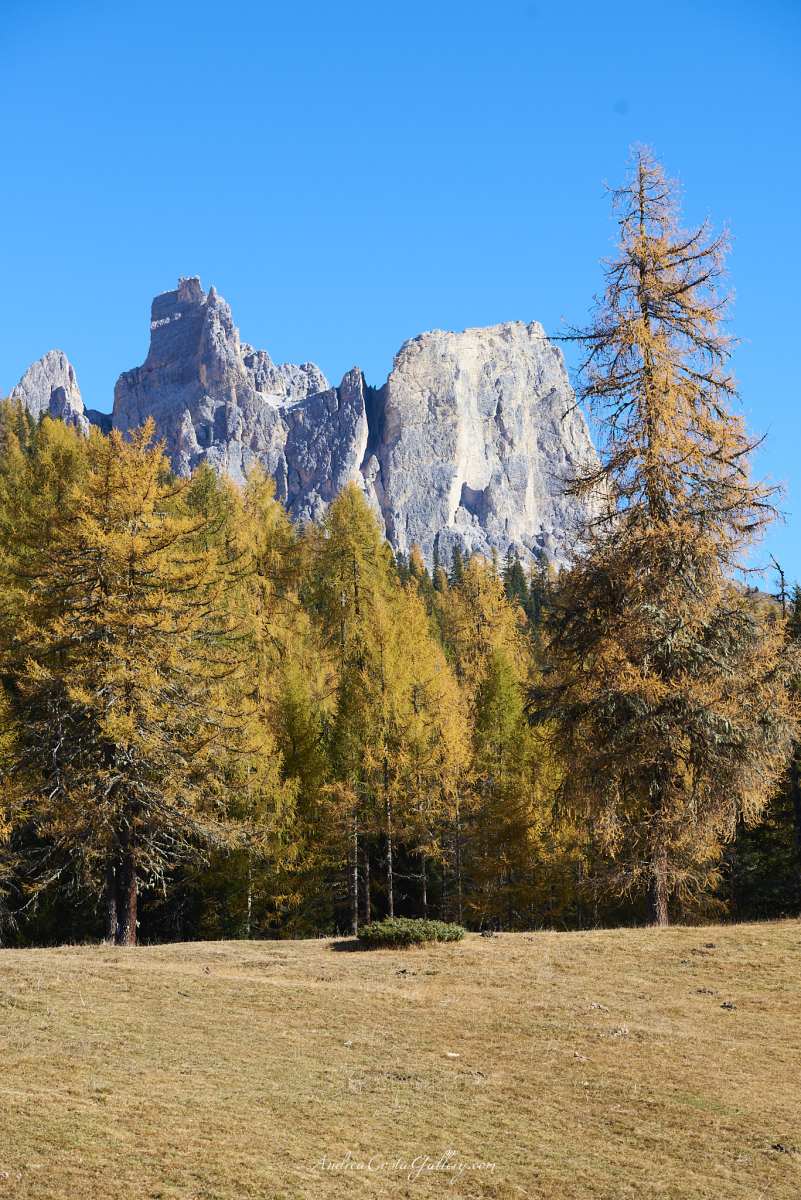
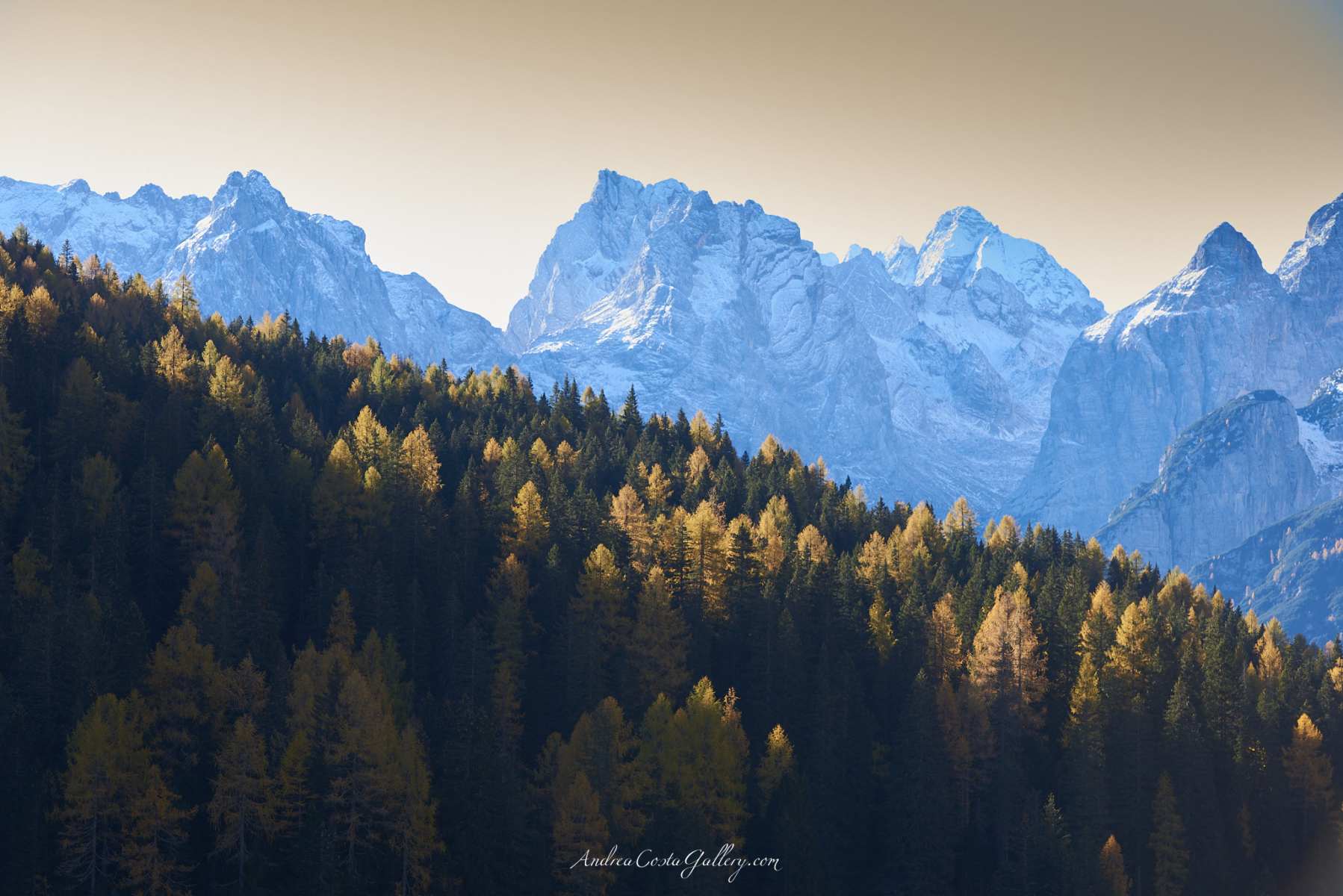
Molti pensano che la montagna richieda solo grandangoli. In realtà, inoltrandomi tra i sentieri del passo, monto il 70-200mm. Utilizzando focali lunghe, ottengo una compressione prospettica che mi permette di isolare piccoli gruppi di larici dorati contro le pareti rocciose verticali del Sorapiss. Lavoro a diaframmi intermedi (intorno a f/8 o f/11) per mantenere una nitidezza eccellente su tutto il soggetto, tenendo gli ISO bassi per preservare la massima gamma dinamica.
3. Esposizione e lettura della luce
Con una scena così contrastata — rocce bianche illuminate dal sole e boschi in ombra — il rischio di bruciare le alte luci o chiudere le ombre è altissimo. Tengo d’occhio l’istogramma, preferendo sottoesporre leggermente (di circa -0.3 o -0.7 EV) per proteggere le parti più luminose della roccia dolomitica. Quelle sfumature d’oro nei larici meritano di non essere perse.
Il respiro della montagna
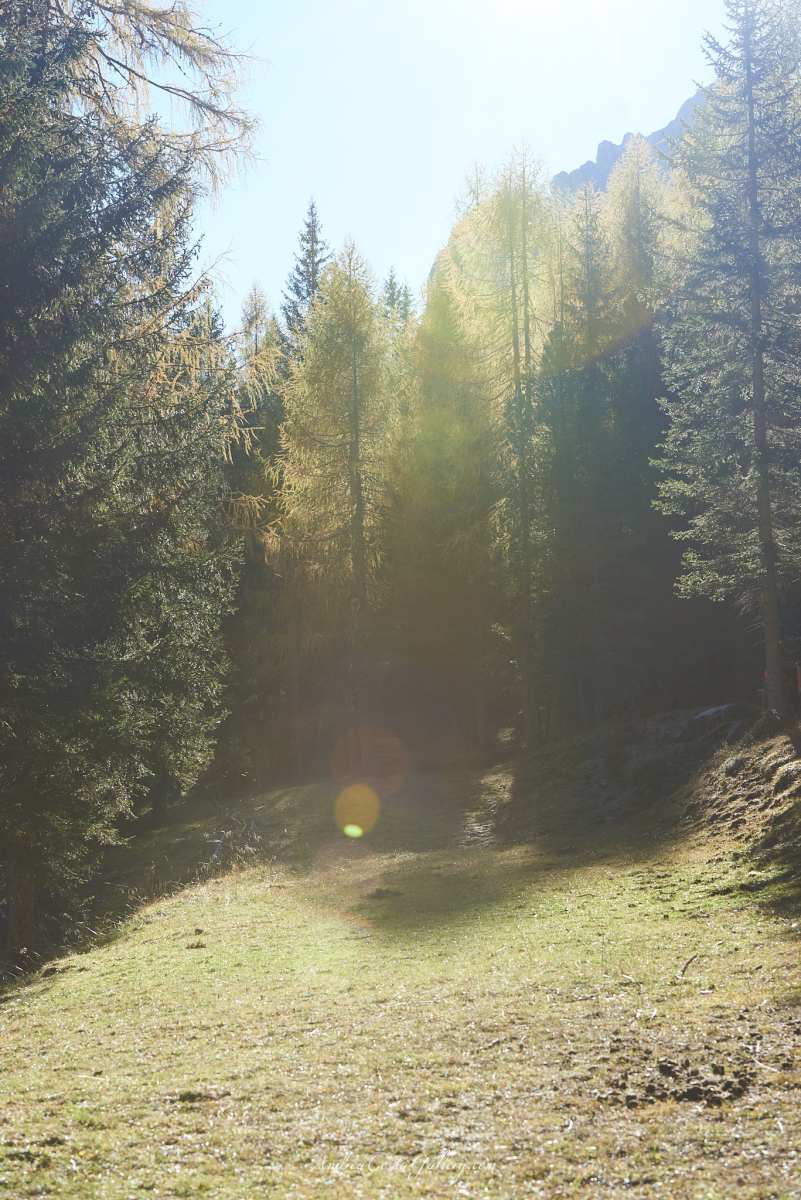
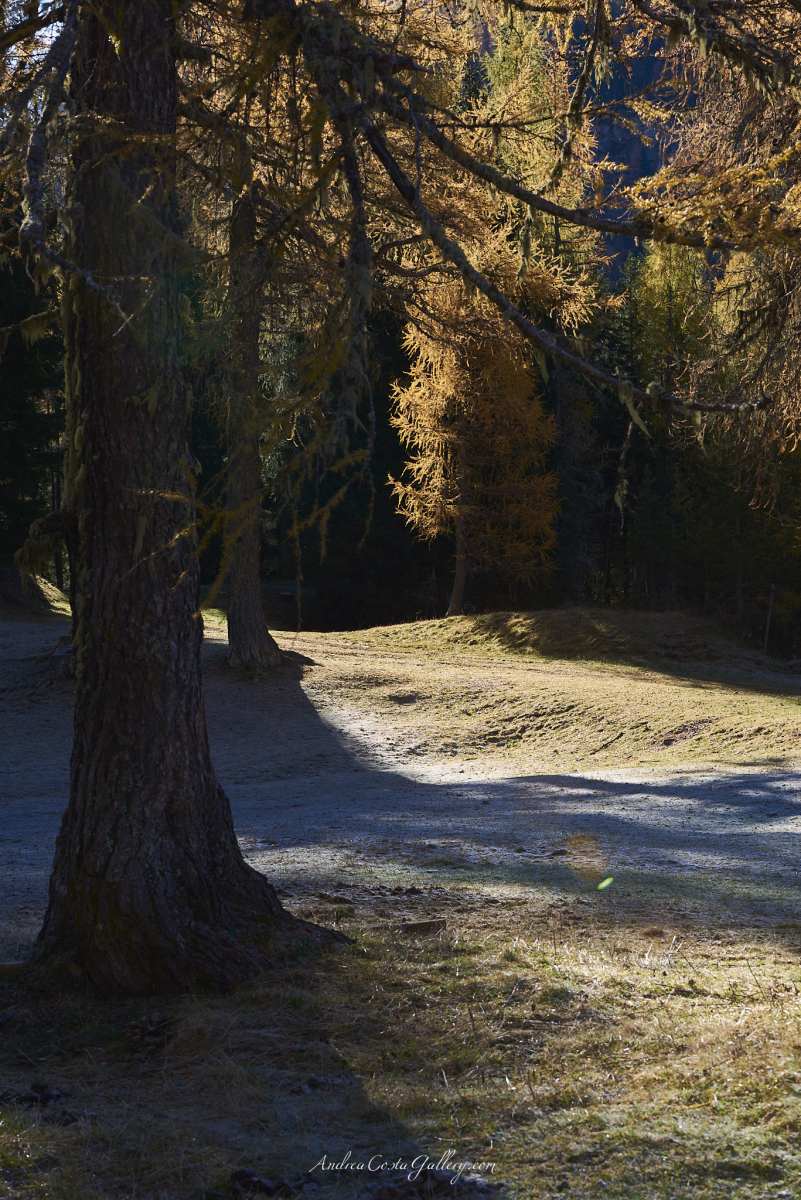
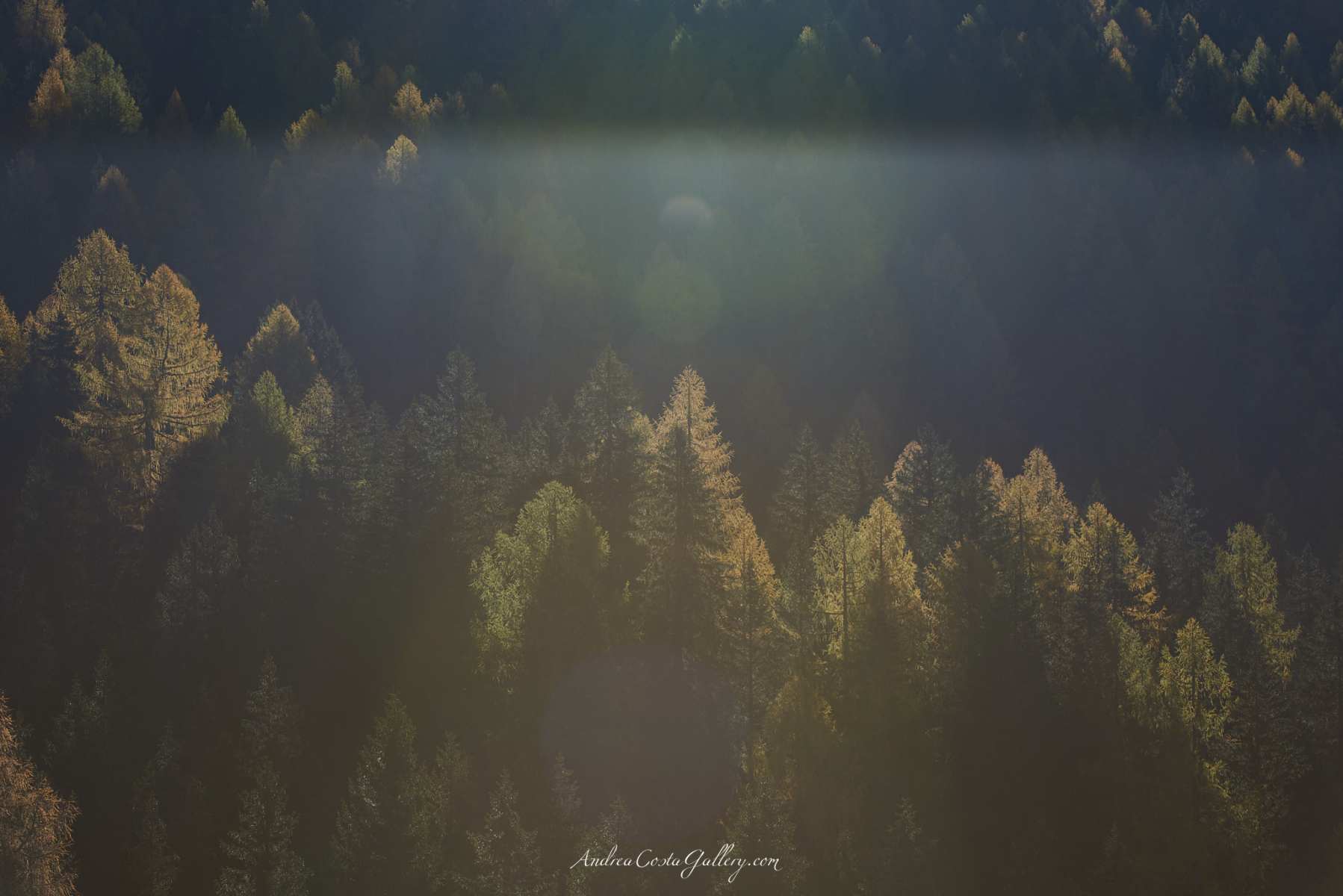
Continuo a camminare, avvolto dal profumo resinoso del sottobosco umido di brina e muschio. Ogni folata di vento fa staccare una pioggia leggera di aghi dorati che danzano nell’aria prima di posarsi sul sentiero, creando un tappeto soffice e scricchiolante.
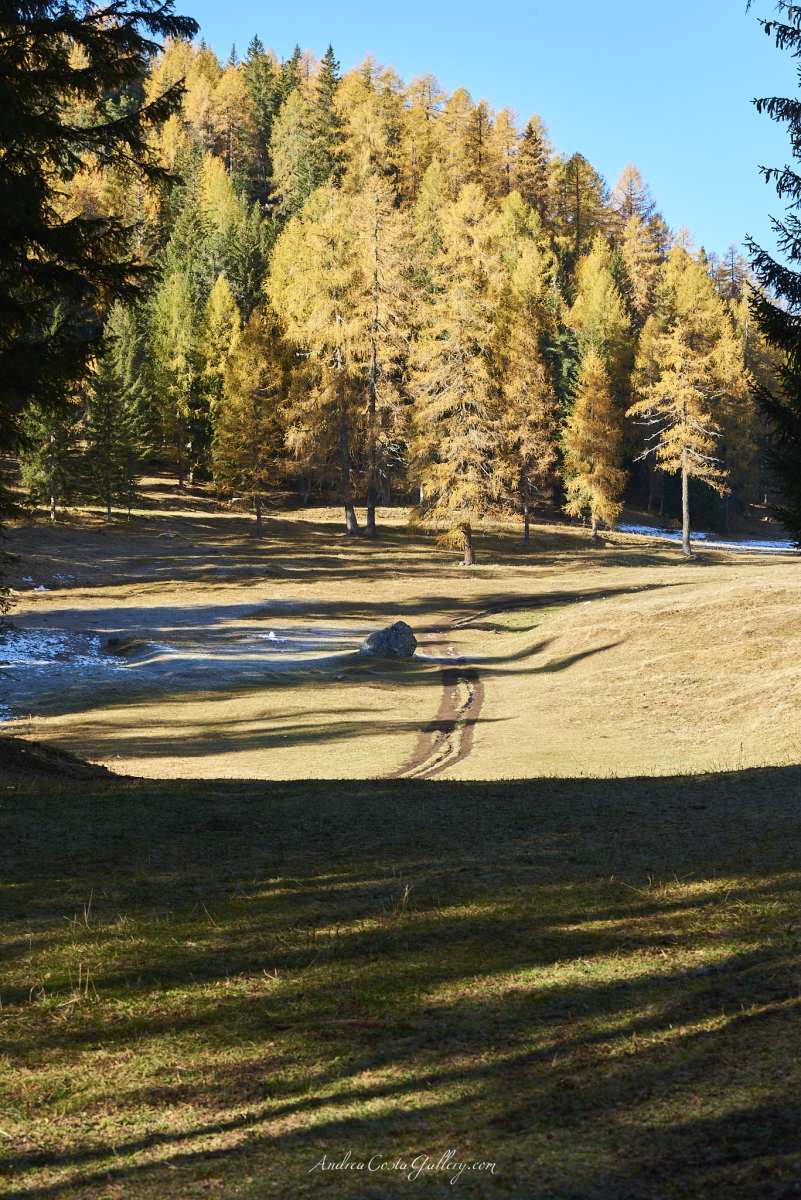
Mi siedo su un masso erratico a godermi lo spettacolo. Fotografo non solo con la macchina fotografica, ma con gli occhi: la luce del pomeriggio che accarezza i larici li fa sembrare tessere di un mosaico prezioso, un ultimo, splendido fuoco d’artificio prima del grande sonno invernale.
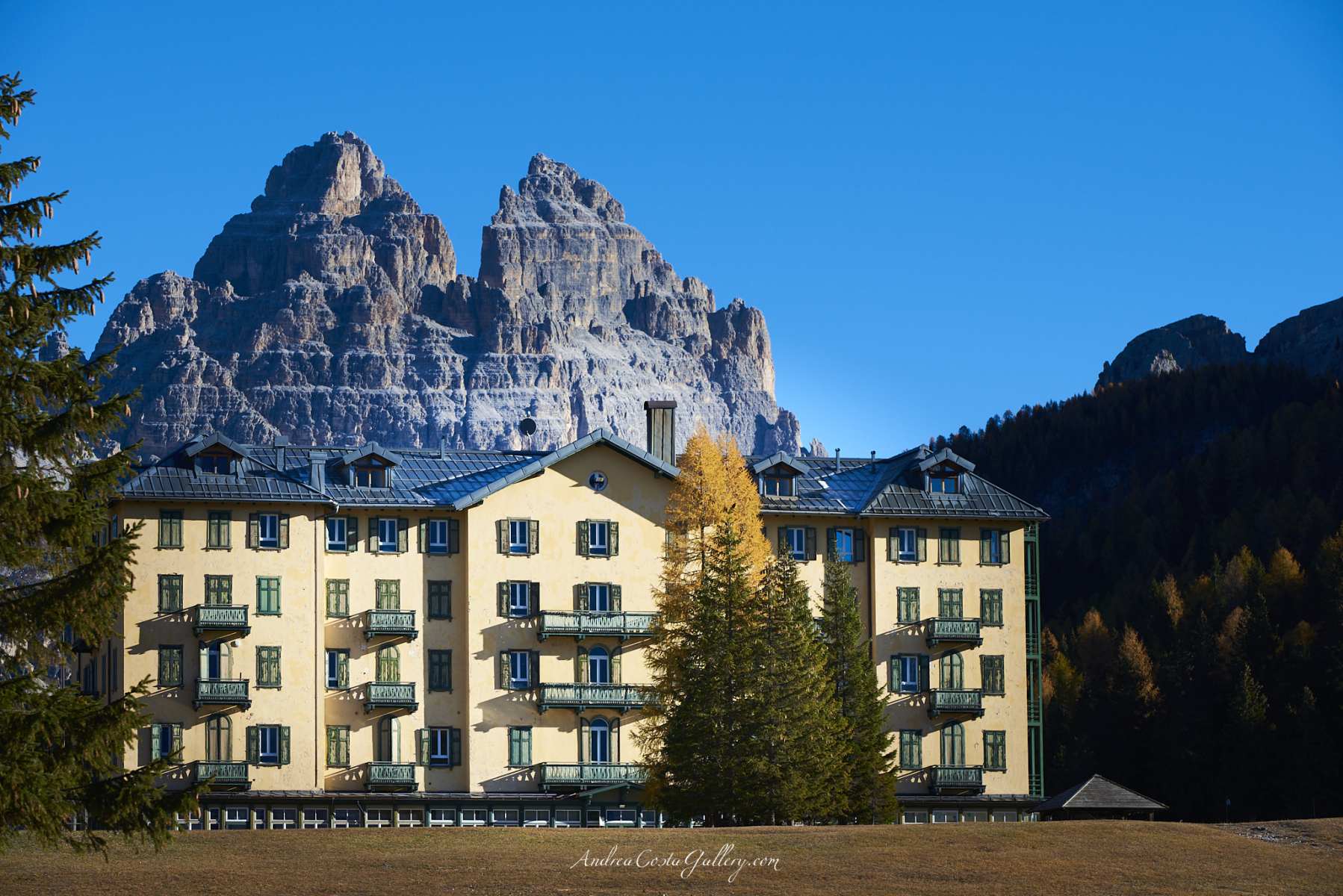
Il Passo Tre Croci, in questo mese di transizione, non è solo un luogo di passaggio tra Cortina e Misurina; è una galleria d’arte a cielo aperto dove la natura, con pennellate di pura luce e ocra, ci ricorda la magnifica poesia del cambiamento.
Se ami la fotografia di paesaggio e vuoi esplorare altri scatti e progetti dedicati alle meraviglie delle nostre montagne, ti invito a visitare il mio sito internet andreacostagallery.com. Se invece vuoi vivere in prima persona le mie escursioni fotografiche e seguire tutte le mie avventure tra le vette, ti aspetto sul mio canale YouTube Andrea Costa Gallery!
There is a special silence at Passo Tre Croci in autumn. A silence that is not an absence of sound, but an invitation to listen. When I arrive up here in mid-October, the air is crisp and sharp, the kind that wakes your senses and makes you bury your hands in your fleece pockets even before pulling out your camera backpack.
At an altitude of 1,809 meters, Cortina d’Ampezzo feels distant, a painting set in the valley below. But it is right up here that nature brings its most intimate and fiery spectacle to life: the realm of the alpine larch.
The Magic of Foliage: When the Forests Light Up
Unlike broadleaf trees that turn to warm hues as early as late September, the larch (Larix decidua) follows its own ancient rhythm. It is an unusual conifer that chooses to shed its needles for the winter, but before surrendering them to the earth, it undergoes an extraordinary metamorphosis.
In October, the forests encircling Passo Tre Croci — the slopes of Cristallo and Sorapiss — ignite with a yellow so vivid, almost neon, that it seems impossible to be the work of fading chlorophyll alone. It is a chromatic transition ranging from antique gold to brilliant amber.
Walking along the trails towards Lake Sorapiss or up to the high meadows, I often pause to observe the color composition. The contrast is breathtaking:
- The blazing yellow of the larches dominates the slopes.
- The deep, persistent green of mountain pines and spruces creates a chromatic backdrop of immense depth.
- The severe, limestone gray of the Dolomite walls forms a natural amphitheater, reflecting the low autumn sun.
The Hike and Photographic Technique: Capturing October’s Light
I lace up my hiking boots. My backpack carries just the right gear: camera body, a wide-angle lens (16-35mm) for sweeping landscapes, a medium telephoto (70-200mm) to isolate geometric forest details, and the essential circular polarizing filter.
1. Managing Low Light and the Polarizer
In October, the sun never rises too high in the sky, granting us a “golden hour” that seems to last almost all day. The shadows are long, sharp, and sculpt the mountain shapes. To enhance the larches’ colors, I thread the polarizer onto the lens. Rotating it removes specular reflections and micro-moisture from needles and frost-covered rocks. The result is instant: the yellow becomes rich and saturated, while the cobalt sky behind the peaks turns dramatically dark.
2. Telephoto Lens for Perspective Compression
Many assume mountain photography only requires wide angles. However, as I venture further onto the pass’s trails, I attach the 70-200mm. Using longer focal lengths compresses perspective, allowing me to isolate small clusters of golden larches against the sheer rock faces of Sorapiss. I shoot at medium apertures (around f/8 or f/11) for edge-to-edge sharpness while keeping ISO low to preserve dynamic range.
3. Exposure and Light Reading
With such a high-contrast scene — bright sunlit limestone rocks alongside shaded woods — blowing highlights or crushing shadows is a constant risk. I keep a close eye on the histogram, opting to slightly underexpose (by about -0.3 to -0.7 EV) to preserve detail in the bright Dolomite rock and capture every gold shade.
The Breath of the Mountain
I keep walking, surrounded by the resinous scent of damp undergrowth, frost, and moss. Every gust of wind releases a gentle shower of golden needles dancing through the air before settling on the path, creating a soft, rustling carpet beneath my feet.
I sit on a glacial erratic boulder to soak in the view. I photograph not just with my camera, but with my eyes: the afternoon light caressing the larches makes them look like tiles in a precious mosaic, a final, magnificent fireworks display before winter’s slumber.
If you love landscape photography and want to explore more shots and projects dedicated to our mountains, I invite you to visit my website andreacostagallery.com. To experience my photo hikes firsthand and follow my adventures, join me on my YouTube channel Andrea Costa Gallery!
Il y a un silence particulier au col Tre Croci en automne. Un silence qui n’est pas absence de son, mais une invitation à l’écoute. Quand j’arrive ici à la mi-octobre, l’air est vif, mordant, de celui qui réveille les sens e pousse à plonger les mains dans les poches avant même de sortir le sac à dos photo.
À 1 809 mètres d’altitude, Cortina d’Ampezzo semble lointaine, tableau incrusté au fond de la vallée. Mais c’est ici haut que la nature donne vie à son spectacle le plus intime et flamboyant : le royaume du mélèze alpin.
La magie du feuillage : quand les forêts s’embrasent
À la différence des feuillus qui prennent des teintes chaudes dès la fin septembre, le mélèze (Larix decidua) suit son propre rythme ancestral. C’est un conifère singulier qui choisit de perdre ses aiguilles pour l’hiver, mais avant de les offrir à la terre, il accomplit une métamorphose extraordinaire.
En octobre, les forêts entourant le col Tre Croci — les versants du Cristallo et du Sorapiss — s’enflamment d’un jaune si vif, presque néon, qu’il semble impossible qu’il soit le seul fait de la chlorophylle qui s’efface. C’est une transition chromatique allant de l’or ancien à l’ambre étincelant.
- Le jaune flamboyant des mélèzes domine les pentes.
- Le vert sombre et persistant des pins mugos et des épicéas crée un relief d’une grande profondeur.
- Le gris calcaire et sévère des parois rocheuses sert d’amphithéâtre naturel.
Randonnée et technique photographique
J’enfile mes chaussures de marche. Mon sac est parfaitement équilibré : boîtier, grand-angle (16-35mm), téléobjectif moyen (70-200mm) et l’indispensable filtre polarisant circulaire.
Le polariseur me permet d’éliminer les reflets parasites sur les aiguilles humides de rosée, saturant le jaune des mélèzes et assombrissant le ciel bleu derrière les sommets. Avec le téléobjectif, je compresse la perspective pour isoler les bosquets dorés contre la roche verticale du Sorapiss.
Si vous aimez la photographie de paysage, découvrez mes projets sur mon site andreacostagallery.com. Pour vivre mes randonnées en vidéo, rejoignez-moi sur ma chaîne YouTube Andrea Costa Gallery !
Es herrscht eine besondere Stille am Tre-Croci-Pass im Herbst. Eine Stille, die nicht Abwesenheit von Geräuschen ist, sondern eine Einladung zum Zuhören. Wenn ich Mitte Oktober hier oben ankomme, ist die Luft frisch und klar – genau die Art von Kälte, die die Sinne weckt.
Auf 1.809 Metern Höhe wirkt Cortina d’Ampezzo fern. Doch genau hier oben erweckt die Natur ihr intimstes und flammendstes Schauspiel zum Leben: das Reich der Alpenlerche.
Die Magie der Herbstfärbung: Wenn die Wälder leuchten
Im Gegensatz zu Laubbäumen folgt die Lärche (Larix decidua) ihrem ganz eigenen uralten Rhythmus. Als außergewöhnlicher Nadelbaum wirft sie im Winter ihre Nadeln ab, vollzieht aber vorher eine spektakuläre Verwandlung. Im Oktober erstrahlen die Wälder am Pass in einem leuchtenden Gelb, das von Altgold bis zu strahlendem Bernstein reicht.
- Das leuchtende Gelb der Lärchen dominiert die Hänge.
- Das dichte Dunkelgrün der Latschenkiefern sorgt für tiefe Kontraste.
- Das helle Grau der Dolomitenfelsen bildet die majestätische Kulisse.
Wanderung und Fototechnik
Mit Weitwinkel (16-35mm), Teleobjektiv (70-200mm) und Polfilter fange ich das flache Oktoberlicht ein. Der Polfilter nimmt die Reflexionen von den feuchten Nadeln und verstärkt das feurige Gelb vor dem tiefblauen Himmel. Das Teleobjektiv verdichtet die Perspektive und hebt goldene Lärchengruppen vor den steilen Felswänden des Sorapiss hervor.
Wenn Sie Landschaftsfotografie lieben, besuchen Sie meine Website andreacostagallery.com. Begleiten Sie meine Foto-Exkursionen auch auf meinem YouTube-Kanal Andrea Costa Gallery!
Hay un silencio especial en el Paso Tre Croci en otoño. Un silencio que no es ausencia de sonido, sino una invitación a escuchar. Cuando llego aquí a mediados de octubre, el aire es fresco y cortante, de esos que despiertan los sentidos antes de sacar la mochila fotográfica.
A 1.809 metros de altitud, Cortina d’Ampezzo parece lejana. Pero es aquí arriba donde la naturaleza cobra vida con su espectáculo más íntimo: el reino del alerce alpino.
La magia del follaje: cuando los bosques se encienden
A diferencia de los árboles caducifolios, el alerce (Larix decidua) sigue su propio ritmo ancestral. Es una conífera singular que pierde sus agujas en invierno, pero antes realiza una transformación extraordinaria. En octubre, las laderas del Cristallo y del Sorapiss se encienden con un amarillo vibrante que va del oro antiguo al ámbar brillante.
- El amarillo deslumbrante de los alerces domina las laderas.
- El verde oscuro de los pinos crea un relieve de gran profundidad.
- El gris calizo de las paredes de los Dolomitas sirve de anfiteatro natural.
La excursión y la técnica fotográfica
Equipado con un gran angular (16-35mm), un teleobjetivo (70-200mm) y un filtro polarizador circular, me dispongo a capturar la luz rasante de octubre. El polarizador elimina los reflejos en las agujas húmedas por la escarcha, saturando el dorado del alerce frente al cielo azul cobalto.
Si te apasiona la fotografía de paisaje, te invito a visitar mi sitio web andreacostagallery.com. ¡Para acompañarme en mis excursiones fotográficas, suscríbete a mi canal de YouTube Andrea Costa Gallery!

Comments are closed